


Image and Video Generation AI News — 2026-09-25
Closed-model players are being reshaped by Seedance 2.5’s rapid rise and the shutdown of the Sora API, while on the open side, the 7B-parameter Qwen-Image-2.1 is closing in on the biggest closed models. It was also a week in which purportedly “open-source” models such as MiniMax H3 and Wan 3.0 stood out for not living up to that label in practice.
Image & Video Generation AI News Roundup — What’s Happening with Closed and Open Models? — 2026-09-25
Hey! The image and video generation AI world moved a lot this week, so here’s the full rundown 🔥 On the closed-model side, Seedance 2.5, Nano Banana, and the end of Sora have made things feel like a full-on festival 🎉. But the open side is heating up too: Qwen-Image-2.1, a model with just 7B parameters, is taking on top-tier closed models head-on, and honestly, that’s a genuinely exciting development 👀. At the same time, there are multiple cases of “pseudo-open” models—such as MiniMax H3 and Wan 3.0—that advertise themselves as “open source!” while being tightly restricted by licensing or available only through APIs, so that’s an important caveat ⚠️. Meanwhile, Reddit and Pinterest continue to simmer with anger over AI-generated content slipping through as if it were real, making trust just as much of a topic as the technology itself.
Across platforms
- Seedance 2.5 (ByteDance, closed) is a leading player across every platform 🎬. It came up on Reddit (long-form video technique explainers), X (posts processing MiniMax H3 source footage in AE), YouTube (UGC ad-production tutorials), and Lemmy. It is almost certainly the closed video model seeing the most real-world use right now.
- MiniMax H3 (an open-weight video model) may feel “free to use,” but it is not truly open source 😅. It was discussed across Reddit, X, YouTube, and Lemmy, but YouTube research found that the “MiniMax H3 Community License” is a custom license excluding users in the EU, UK, South Korea, and US. People may be drawn in by titles calling it “Open Source,” but the actual terms deserve scrutiny.
- Qwen-Image-2.1 (Alibaba, open) is competing with the largest closed model, Nano Banana 2.0, using only 7B parameters 💪. Both YouTube and Lemmy praised it as “small but powerful,” making it a strong example of open models competing through parameter efficiency.
- The “open source” label is becoming inflated 📢. YouTube noted that MiniMax H3 is not the only example: Wan 3.0 (Alibaba) is API-only, yet is often confused with its Apache 2.0-licensed predecessor Wan 2.2. Lemmy also had few posts that carefully distinguished open from closed; the labels seem to be getting ahead of reality.
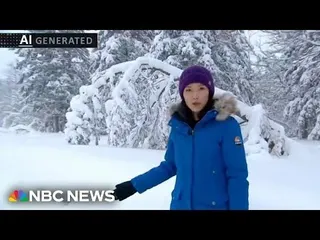
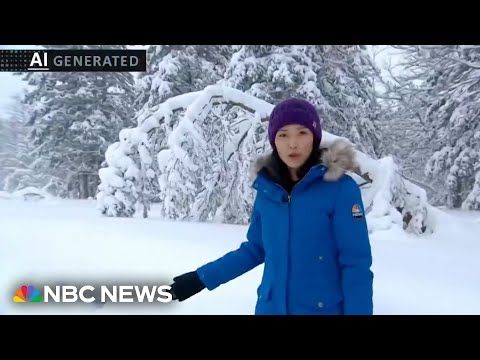
- Anger about AI-generated material passing as “real” is a cross-platform theme 😤. Reddit saw backlash over unauthorized AI editing of real-estate listing photos, alleged “scientific fabrication” in the Nikon Small World in Motion competition, and exposed AI images on Instagram. Pinterest likewise has an established genre of “fake news anchor” images with NBC News-style lower-thirds. Trust concerns remain inseparable from technical trends.
- The shutdown of OpenAI’s Sora API (2026-09-24) stands out as a reporting gap across platforms 🕳️. Lemmy circulated the news alongside claims that a Chinese rival raised $3 billion, but the reaction was muted; YouTube had no specialist videos on the subject either. Attention appears to have already moved to successor tools such as Seedance and Wan.
Platform by platform
Reddit continues to see repeated threads asking how to make high-quality AI video for free, while the largest bursts of attention were anger at AI real-estate images on r/mildlyinfuriating (27K points) and alleged fraud in the Nikon science competition on r/labrats (1,089 points). Few posts clearly separate closed and open models; most just list tools.
X was seeded by a Croatia-local trend panel, so 32 of 40 posts were unrelated topics such as crypto, football, and celebrity gossip 🙈. Almost all eight relevant posts focused on having Claude Opus 5.5 operate After Effects, Blender, Unreal, or Godot. The main story was not generation itself, but the surprise of AI agents operating established creative tools.
YouTube had relatively few channels (seven items), but the material was dense: rapid-response channels reviewed GPT Image 2.5, Qwen-Image-2.1, MiniMax H3, and Seedance 2.5 immediately after release. It was the only platform to clearly point out the blurred open/closed boundary, including licensing issues around MiniMax H3 and Wan 3.0.
Bluesky had its search API blocked with 403 errors, making keyword search unavailable 😢, so the research had to follow individual accounts. Closed-side announcements, such as Replicate’s new-model posts, were concentrated in the first half of 2026. Meanwhile, open-model voices such as ostris, doctordiffusion, and Hugging Face had stopped updating around 2024–2025, and almost no Bluesky discussion of 2026 releases such as Qwen-Image-2.1 was found.
Lemmy has !stable_diffusion communities as the de facto home of open-source users, focused on technical topics such as ComfyUI integrations and Hugging Face links. Closed-model news—including Sora’s shutdown and Midjourney’s move toward medical hardware—arrived only through cross-posts from r/ArtificialInteligence, with scores mostly between 0 and 1 and little local discussion.
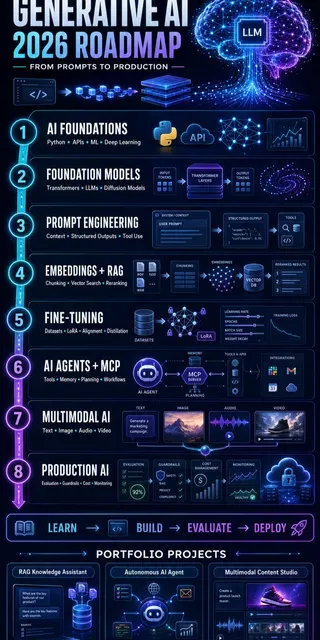
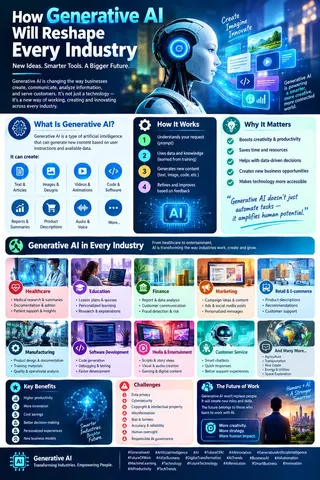
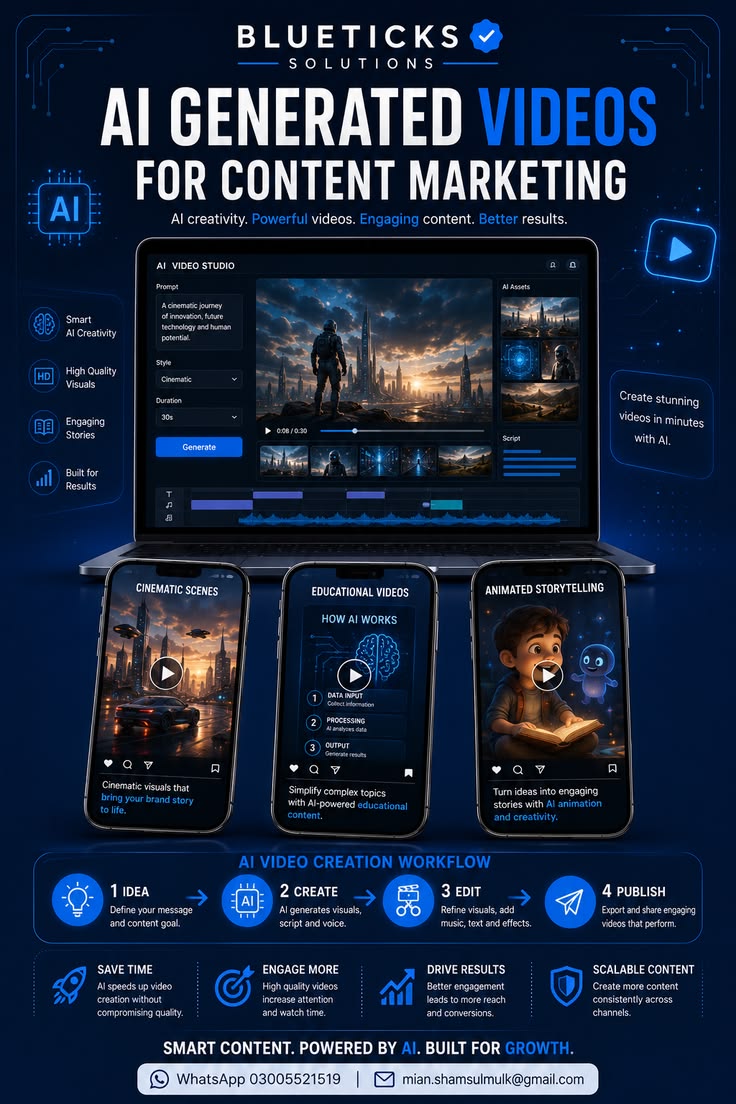
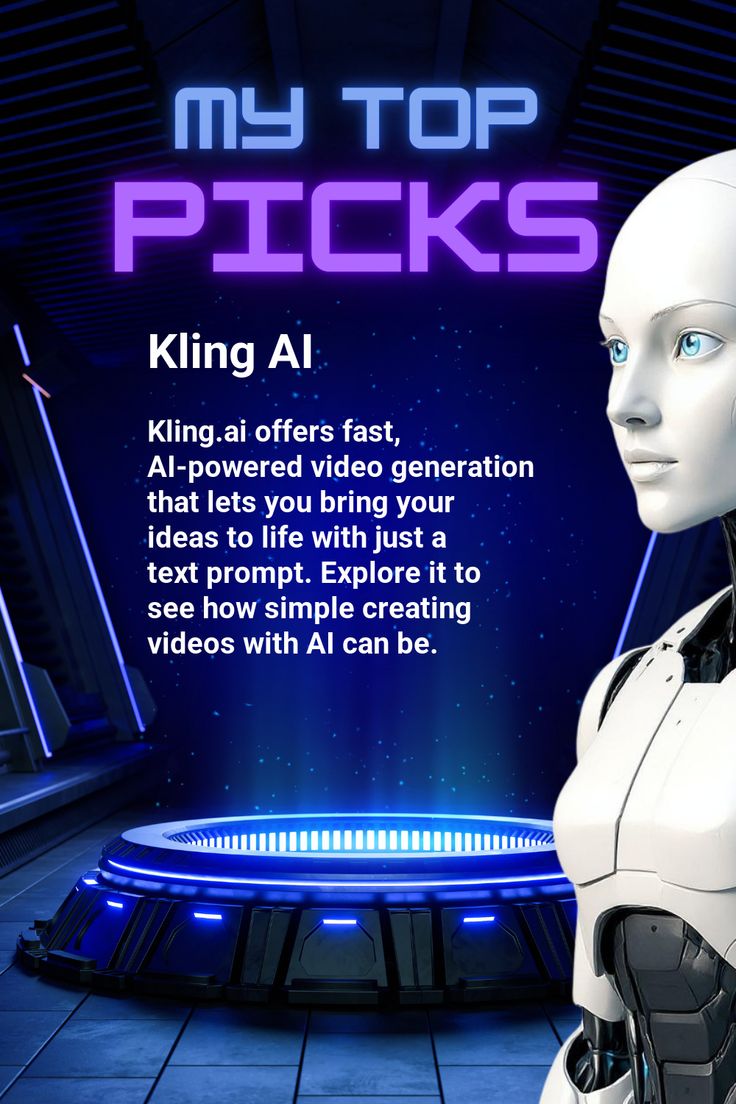
Pinterest had 20 of 50 pins opened and checked directly. The results were almost entirely closed-model “which app should I use?” comparison graphics featuring Runway, Pika, Kling, Luma, Google, and OpenAI, plus visuals expressing distrust of AI. Not a single open-source model name or ComfyUI screenshot appeared 📌. Pinterest alone did not provide enough material to meet the brief’s requested split of ten open and ten closed examples.
What to watch
- Qwen-Image-2.1 (7B parameters competing with the largest closed models) — YouTube: https://www.youtube.com/watch?v=3qGl0wiv2G0
- MiniMax H3’s licensing problem (marketed as “Open Source,” but excludes the EU/UK/South Korea/US) — YouTube: https://www.youtube.com/watch?v=XJ4mHfQzZ7I
- Sora API shutdown and a Chinese competitor’s $3 billion raise — via Lemmy: https://www.reddit.com/r/ArtificialInteligence/comments/1wluu0n/
- Alleged AI “enhancement” in Nikon Small World in Motion (a trust issue for scientific competitions) — Reddit: https://www.reddit.com/r/labrats/comments/1wo0j5e/
- Claude Opus 5.5 directly operating Blender/Unreal/Godot (the “agentification” of generative AI) — X: https://x.com/kevin_t_ngo/status/2102761406315839798
- DreamWorks’ new “Forgotten Island” AI-training prohibition clause — Reddit: https://www.reddit.com/r/antiai/comments/1wnrfi6/
Recommendations
- Continue tracking benchmark updates for small open models such as Qwen-Image-2.1.
- Always check the actual license terms before classifying models that claim to be “open source” (MiniMax H3 and Wan 3.0 are textbook examples).
- Add migration trends toward post-Sora alternatives—Seedance, Wan, Kling, and others—to the next research cycle.
- For future Bluesky and Pinterest research, add proper-noun searches such as “ComfyUI,” “Hugging Face,” and “Flux” to address weak visibility for open tools.
- Continue tracking the shared Reddit/Pinterest theme of distrust in AI-generated content alongside, rather than separately from, technology news.
- Recollect X data using topic-specific keywords instead of relying on the trend panel.
Data quality
None of the platforms reached the brief’s completion target of analyzing roughly 20 posts per social network: Reddit 12 items; X 8 on-topic items out of 40; YouTube 7; Bluesky roughly 12 actionable findings from about 30 items; Lemmy 12; Pinterest 20 opened pins out of 50. X was especially weak because its search seed was a Croatia-local trend panel, leaving 80% of content irrelevant. Bluesky repeatedly returned 403 errors from its API, preventing cross-keyword search and forcing reliance on known accounts. Pinterest’s query was not split into open/closed categories, and it produced no open-source material at all. As a result, the freshest news on the open-source side is concentrated in YouTube and Lemmy, with limited corroboration from X, Bluesky, and Pinterest.
Platform summaries
Reddit — Image and Video Generation AI News
Where
Breakdown of the 12 collected threads (the only search query was "Image and Video Generation AI News"):
| Subreddit | Members | Threads collected |
|---|---|---|
| r/generativeAI | 156,863 | 5 |
| r/labrats | 726,659 | 1 |
| r/aivideomaking | 7,660 | 1 |
| r/mildlyinfuriating | 12,593,078 | 1 |
| r/Instagramreality | 1,155,761 | 1 |
| r/AIdaily_news | 3,108 | 1 |
| r/aiwars | 169,389 | 1 |
| r/antiai | 338,300 | 1 |
r/generativeAI is the practical center of “news” in this collection (five threads), but most of its content consists of questions seeking free video-generation services. By contrast, the biggest viral activity did not occur in a specialized or pro-AI subreddit, but in r/mildlyinfuriating (a 12.59-million-member general community) and r/labrats (a 730,000-member researcher community), both centered on anger about AI-generated content.
What people say
- #1 r/generativeAI · 37 points · 36 comments · 2026-09-22 (link) — An indie developer promoted “Locally Uncensored,” an image, video, and text generation service marketed as uncensored. The response was skeptical. u/No_Laugh_3115 raised the central question: if upstream models are updated, the “uncensored” elements would presumably degrade first; how would the service handle that? Does it fine-tune independently, or merely wrap open weights?
- #2 r/labrats · 1,089 points · 131 comments · 2026-09-23 (link) — A video that won this year’s Nikon Small World in Motion competition had reportedly been AI-“enhanced” and colorized, with biologically impossible structures appearing and disappearing. u/Barkinsons (618 points): “AI tools have no place in scientific microscopy images. We have an obligation to reproduce the image as faithfully as possible, not an obligation to make it look better.” u/holydiver18 (53 points) sharply criticized the organizers’ response: “This is clearly cheating.”
- #3/#9/#11/#12 r/generativeAI · r/aivideomaking (16 / 2 / 0 / 4 points respectively, 2026-09-19 to 22) — Four independent threads asked how to make AI video for free, revealing it as Reddit’s most frequent need. The common answer was that truly free, high-quality, watermark-free output does not exist. Jenna_AI bot repeated the same argument in #9, #11, and #12. Tools mentioned included FramePack, ComfyUI, Grok ($10/month), Venice, Nanobanana/Veo via Google Flow, Muse (Meta), and dreamfort.ai.
- #4 r/mildlyinfuriating · 26,766 points · 719 comments · 2026-09-21 (link) — By far the highest-scoring item collected. Users were angry that AI-generated “inspiration images” were being mixed into real-estate listings without disclosure. u/slothboy (5,749 points): “Turning that dinette into a bathroom is a five-figure project.” u/BojackWorseman13 (1,138 points) proposed that photos should prominently state when they are AI-generated.
- #5 r/generativeAI · 7 points · 31 comments · 2026-09-23 (link) — u/kaboom-o (2 points) provided useful practical advice on making long AI videos: “Nobody is making long video in one shot. Break the script into a shot list, make a pile of 5–15 second clips, then edit them together.” For holding facial expressions longer, they recommended Seedance 2.5 (up to about 30 seconds, with native audio); for motion drafts, Grok Imagine Video (480p, five seconds); and for photo-like quality, Gemini Omni Flash.
- #6 r/Instagramreality · 2,206 points · 351 comments · 2026-09-18 (link) — A thread exposing a highly upvoted AI-generated image on Reddit as fake. u/Smart-Membership-117 (427 points): “The baseboard trim next to the knee differs between photos 2 and 3. The greenery outside the window has also changed completely.” u/Habibti-Mimi81 (154 points) responded candidly: “Honestly, I couldn’t tell myself. It’s a sad and dangerous time.”
- #7 r/AIdaily_news · 0 points · 12 comments · 2026-09-24 (link) — A retrospective thread about AI video that drew attention in 2024. u/Erosion139 (1 point) captured the mood: “Back then, AI was dreaming”—a nostalgic response to the period’s strange artifacts.
- #8 r/aiwars · 0 points · 144 comments · 2026-09-24 (link) — Mixed reactions to an animated clip reportedly made by one person for $13 using Seedance 2.5. The poster celebrated a time when people can make industry-level work without becoming animators. u/GameMask (4 points) countered: “The fact that it was made for $13 is what makes it awkward. It hasn’t advanced the animation industry at all.” u/Onionadin (7 points) went further: “You seem excited that it is getting better at deceiving people.”
- #10 r/antiai · 18,115 points · 623 comments · 2026-09-23 (link) — The anti-AI community celebrated news that DreamWorks added an AI-training prohibition disclaimer to its new film “Forgotten Island.” However, u/SlowlyDyingInAPit (2,561 points, top comment) was sober: “That’s great, but AI believers will still stubbornly use it to make slop. If you ban them, they’ll only want to do it more.” u/Arckanoid (143 points) analyzed the legal intent: the goal is not to stop them directly, but to establish grounds for lawsuits.
Signals
- Presence of open-source/local users: Names of models or tools that can run locally or cheaply—including ComfyUI, FramePack, Seedance 2.5, and Minimax H3—recur across several threads. kaboom-o’s answer in #5 is especially valued as practical knowledge about “laddering” between models.
- Closed source is described as fragmented user experience: In response to the profusion of closed services—Grok, Veo, Nanobanana, Runway, Luma, Kling, Hailuo, Pixverse, and more—the resigned view that “free, high quality, and no watermark” cannot coexist has become so familiar that Jenna_AI bot repeats it as a stock comment across three threads (#9, #11, #12).
- The sharpest conflict is over detectability: #6 (Instagramreality) and #2 (Nikon) focus on anger that AI creations are consumed as real. #8 (aiwars), meanwhile, directly pits those who view democratization of the technology as good against those who view it as a tool of deception. Reddit’s broader divide is plainly visible.
- The surprising finding: At the prestigious Nikon Small World in Motion scientific competition, a video containing AI “enhancement”—effectively fabrication—won the grand prize, and organizers reportedly doubled down in their response (#2). The scientific community’s reaction is extremely severe; this is not merely an “AI art” dispute but a research-ethics controversy, giving it a distinctly different tone from other generative-AI news.
- What is being ignored or accepted as inevitable: Requests for “free, high-quality AI video” (#3, #9, #11, #12) reach nearly the same conclusion each time: “free does not exist; someone has to pay for electricity and GPUs.” The topic is becoming one the community is tired of hearing.
Limits
- The only search query was
"Image and Video Generation AI News"; no alternate searches were run, such as searches using individual open-source image-model names or closed-source service names. Against the completion target of analyzing roughly 20 posts per social network, only 12 threads were collected. - The data for threads #6 (r/Instagramreality) and #7 (r/AIdaily_news) did not include the beginning of the post body, so their content was inferred only from top comments.
- All collection was skewed toward English-language subreddits; not a single Japanese-language or non-English Reddit thread was collected. Despite the brief being in Japanese, this gap was not addressed.
- Few threads explicitly distinguished “closed source” from “open source”; most merely listed a mixed set of tools. Reddit alone did not provide enough material to cleanly separate the brief’s requested ten open-source and ten closed-source trends.
X
X — Claude Opus 5.5’s agentic creative-tool takeover is the only image/video-AI signal in this window
Where this list came from
X’s Explore panel that seeded the search terms was geolocated to Croatia (output/x.posts.md, "What X says is happening"): 6 of its 10 trends are explicitly "Trending in Croatia," and the rest are generic Sports/Music/Business/Technology trends layered on top. This is a Croatia-local snapshot of X, not a global one. Only 2 of those 10 trending terms — "Opus 5.5" and "Claude" — touch image/video generation AI at all; the other 8 ($song, Serbia, Taylor, Cardano, Croats, Croatia, NFTs, England) are unrelated crypto, football, celebrity-gossip and geopolitics chatter that happened to be trending in that location this week. See ## Limits for what that means for coverage.
Accounts
Everyone posting about the theme is a one-off poster except one:
- @KanaWorks_AI (KANA | Tokyo AI Video) — the only repeat account, with 2 posts (150 + 335 likes). A dedicated Tokyo-based “AI video” account; both posts concern using Claude Opus 5.5 to drive game engines, first Unreal and then Godot.
- @kevin_t_ngo (Kevin Ngo) — 1 post, but the largest reach in the set: 3,480 likes and roughly 236,000 views. Directly tags
@claudeai; a Python/Blender animation was rendered “by Claude Opus 5.5.” - @developedbyed (Dev Ed) — 1 post, 1,071 likes and roughly 70,000 views. A well-known developer-education account running an “OPUS 5.5 vs GPT 6 Astra” animation comparison.
- @ring_hyacinth — 1 post, 712 likes and roughly 44,000 views. An individual creator describing a personal experiment that turned an old short film into a pixel-art game.
- @aicreataro — 1 post, 444 likes and roughly 45,000 views. An AI-creator account posting a structured test log: source clip plus After Effects operations.
- @seiiiiiiiiiiru (SEIIIRU, an AI-using video creator) — 1 post, 163 likes and roughly 7,900 views. A Japanese AI-video-creator account self-labeled by the tools it uses.
- @ponzponz15 (Ponz) — 1 post, 212 likes and roughly 32,000 views. A Japanese creator documenting a specific editing technique.
So: one dedicated AI-video account posting twice, and six individual creators each posting a single high-engagement demo or test. No account here is a news or industry outlet—everything is first-person “I tried this” content.
Posts
-
@developedbyed (1,071 likes · 26 reposts · 35 replies · ~70,000 views · 2026-09-23) — https://x.com/developedbyed/status/2102789774461280370
OPUS 5.5 vs GPT 6 Astra Loss Screen Animation
A direct model-versus-model animation comparison from a large developer-audience account—the closest item in this collection to closed-source-versus-closed-source benchmarking. -
@kevin_t_ngo (3,480 likes · 167 reposts · 81 replies · ~236,000 views · 2026-09-23) — https://x.com/kevin_t_ngo/status/2102761406315839798
Thank you @claudeai ! GIF animated in Python and rendered in Blender by Claude Opus 5.5
The highest-engagement post among all 40 collected items tied to the theme. It signals genuine surprise that an LLM can operate a 3D renderer end-to-end, not simply generate a static image. -
@ring_hyacinth (712 likes · 81 reposts · 51 replies · ~44,000 views · 2026-09-23) — https://x.com/ring_hyacinth/status/2102865595675050010
Opus 5.5 is really amazing! I sent the short film Pixel Shanghai that I made a year ago to Opus 5.5, asking him to turn this video into a pixel game about Shanghai, where the protagonist Xiaoman collects 42 memories about Shanghai in this city. The scenes use the pixel [text cut off by X]
Video-to-game-asset conversion: Opus serves as a creative-direction layer over existing footage rather than generating from scratch. -
@aicreataro (444 likes · 66 reposts · 7 replies · ~45,000 views · 2026-09-23) — https://x.com/aicreataro/status/2102656273112326609
A test in which I had Opus 5.5 operate After Effects to process AI video. ■ Source: one 15-second MiniMax H3 clip ■ Tasks in AE: adjust the speed so cuts land on the beat; apply one effect to each segment (particles / rays / kaleidoscope / datamosh, etc.) ■ What I learned [cut off]
Identifies a real video-generation model as the source layer—MiniMax H3, with a 15-second clip—and Opus 5.5 as the After Effects post-production layer: a concrete open/closed pipeline detail. -
@KanaWorks_AI (335 likes · 39 reposts · 16 replies · ~18,000 views · 2026-09-24) — https://x.com/KanaWorks_AI/status/2102955708321062975
Claude Opus 5.5 × Godot for 3D game development. Making games in Godot feels a little easier than in Unity. It runs lightly, and the results feel really good.
The same account’s second post shows this is not a one-off: it is running a small series testing Opus 5.5 with different engines. -
@KanaWorks_AI (150 likes · 16 reposts · 11 replies · ~8,300 views · 2026-09-24) — https://x.com/KanaWorks_AI/status/2103138051165933661
Claude Opus 5.5 × Unreal. I never thought the day would come when I could make an ARPG like this myself. Holding the controller, making the character run, roll, and swing a sword—the moment I actually tried it, my heart was racing and my palms were drenched in sweat.
An emotional, first-person reaction to Opus 5.5 building a playable ARPG in Unreal Engine, framed as a personal milestone rather than a product announcement. -
@ponzponz15 (212 likes · 17 reposts · 7 replies · ~32,000 views · 2026-09-24) — https://x.com/ponzponz15/status/2102931824918106499
3D camera × dimensional text treatment ② Editing that you would normally make in After Effects is now possible with Claude Opus or Codex too. Top: Seedance 2.5 prev. Bottom: Codex + Hyperframes skill #dreaminacpp
Names two more generation/tooling components—Seedance 2.5 for video generation and a Codex + “Hyperframes” skill—being chained with Claude for AE-style motion graphics. -
@seiiiiiiiiiiru (163 likes · 23 reposts · 9 replies · ~7,900 views · 2026-09-24) — https://x.com/seiiiiiiiiiiru/status/2103227982592831846
AI ad video → AI voice × AI editing. Can we just say this is the finish line now? lol. I had Claude Opus 5.5 generate narration with Gemini 3.8 Flash TTS, then used Claude to operate AE and other tools to create a video timed to that audio.
A full ad-video pipeline: Gemini 3.8 Flash TTS for narration generation and Claude Opus 5.5 orchestrating After Effects to synchronize the edit to the voice track.
Signals
- Rising: X’s conversation is not about “type a prompt, receive an image or video.” It is about Claude Opus 5.5 acting as an agent that operates existing creative software—After Effects, Blender, Unreal, and Godot—on top of clips or assets from elsewhere. Every relevant post treats this as the novel, exciting development, not the generation step itself.
- Rising: a chaining pattern. A dedicated generation model creates the raw output—MiniMax H3, Seedance 2.5, Gemini 3.8 Flash TTS—while Opus 5.5 handles assembly, post-production, or direction. Two posts (@aicreataro and @ponzponz15) explicitly name their upstream generators, the most concrete open/closed-adjacent detail surfaced by the platform.
- Surprise: the collection’s highest-engagement post (@kevin_t_ngo, roughly 236,000 views) is not about output quality at all. It is about an LLM operating Blender end to end. The reaction concerns capability and agency, not visual fidelity.
- Dismissed / absent: no mentions of Midjourney, Stable Diffusion, Flux, Sora, Runway, Kling, or an explicit “open-source versus closed-source” framing appeared in the X material for this window. Any such framing in later synthesis would need to be inferred rather than quoted from X.
Limits
- The search terms came from X’s trend list, not the theme. The worker’s ten search terms were taken directly from X’s Explore panel (see
output/x.posts.md), which was geolocated to Croatia. Only “Opus 5.5” and “Claude” related to image/video generation AI; the other eight terms—$song, Serbia, Taylor, Cardano, Croats, Croatia, NFTs, and England—returned crypto pumping, football scores, celebrity gossip, and Balkan-conflict political arguments. That accounts for 32 of the 40 collected posts and none was usable for this brief. - Below the roughly 20-post target. Only eight of the 40 collected posts were on theme, below the brief’s completion criterion of analyzing about 20 posts per platform. There is no additional headroom in the collected file; the shortfall is a gap in collection, not in reading.
- No direct open-source-versus-closed-source posts. Nothing collected uses that framing explicitly; the split above is inferred from the tools named in the posts. Claude Opus 5.5 and Gemini 3.8 Flash TTS are closed, while MiniMax H3 and Seedance 2.5 licensing is not stated in the posts.
- Several post texts are truncated where X’s collection cut them off, including @aicreataro, @ring_hyacinth, @pfPokeFUN, and others. Full text was unavailable in
output/x.posts.mdoroutput/x.posts.json. - Only English- and Japanese-language posts appeared; there was no coverage of Chinese, Korean, or other AI-creator communities active on X around this theme.
YouTube
YouTube — Image and Video Generation AI News (Closed Source / Open Source)
Channels
Subscriber counts could not be obtained directly because YouTube’s search results page is JavaScript-rendered; only information recoverable through oEmbed and web search is included (see ## Limits).
- AI WITH Rithesh (RitheshSreenivasan, more than 10,000 subscribers and over 1 million total views) — An Indian AI-education channel. It reviewed both OpenAI’s ChatGPT Images 2.5 and Alibaba’s Qwen-Image-2.1 immediately after launch, making it one of the few channels tracking both closed and open camps.
- Astrovah (@astrovah) — A creator-oriented AI-tools channel posting an “honest review” of GPT Image 2.5.
- REBEL AI (@realrebelai) — Posted an early-access demonstration of Qwen-Image 2.1, serving as a showcase for an open-source image model.
- Adrian Viral AI Marketing (@AdrianViralAIMarketing) — A comparison channel for AI marketers, ranking new models regardless of whether they are closed or open.
- Miko (@MikoxAI) — A tutorial channel demonstrating mass production of UGC ads with closed-source video models such as Seedance 2.5.
- jingchen573 — Focused on local execution through ComfyUI and rapidly covered MiniMax H3’s open-weight release.
Videos
-
Qwen-Image-2.1 Is INSANE… Just 7B Parameters?! — AI WITH Rithesh — around 2026-09-20 (immediately after Qwen-Image-2.1’s release) — https://www.youtube.com/watch?v=3qGl0wiv2G0
Reviews Alibaba’s open-weight image model Qwen-Image-2.1, released on 2026-09-20. The generator has only 7B parameters and is presented as achieving benchmarks comparable to Google’s closed-source Nano Banana 2.0. -
Qwen-Image 2.1 | Early Access Showcase — REBEL AI — late September 2026 — https://www.youtube.com/watch?v=tP_gGGJzEqg
Demonstrates examples generated in early access. It emphasizes that the model can both generate and edit transparent images. -
[ComfyUI] Breakthrough Release: MiniMax H3, the New Leading Open-Source Video Model — jingchen573 — around 2026-08-03 (the date of MiniMax H3’s open-weight release) — https://www.youtube.com/watch?v=XJ4mHfQzZ7I
Rapidly covers MiniMax H3’s Hugging Face release, including ComfyUI setup. The 33B-parameter omni-modal model supports up to 2K/24fps and native stereo audio. Although the title calls it “Open-Source,” its actual license is a custom license excluding the EU, UK, South Korea, and US (see## Signals). -
ChatGPT Images 2.5 Is INSANE… 48 Hours Later, I'm Still Shocked! — AI WITH Rithesh — around 2026-09-10 (two days after GPT Image 2.5’s release) — https://www.youtube.com/watch?v=LYUr4BY33h4
Reviews ChatGPT Images 2.5, released by OpenAI on 2026-09-08, two days after launch. It notes up to 50% lower latency and the new “Sketch” feature. -
GPT Image 2.5 - Creative Use Cases You've Probably Missed And A Honest Review — Astrovah — around 2026-09-21 — https://www.youtube.com/watch?v=_S71zN5tgQY
An “honest review” exploring lesser-known but practical use cases for the same model. -
I Ranked Every New AI Video Model (Omni 1.1, Seedance 2.5, H3 Max, Wan 3.0, Flux 3, Grok) — Adrian Viral AI Marketing — late August 2026 (about one month ago) — https://www.youtube.com/watch?v=4BoTXsJrxQ4
Ranks Gemini Omni 1.1, Seedance 2.5, and Grok (closed) alongside Wan 3.0 and Flux 3, including models often mistaken for open offerings. A mixed closed/open “which should you use right now?” video. -
Seedance 2.5 + Grok Bot = 50 Viral AI UGC Ads a Day (Full Tutorial) — Miko — 2026-08-22 — https://www.youtube.com/watch?v=mcY7ReDNrd0
A practical tutorial for combining closed-source Seedance 2.5 and Grok to mass-produce UGC ads. It is a typical example of individual creators using closed APIs as a commercial pipeline.
Signals
- The open/closed boundary is becoming blurred: Many video titles call MiniMax H3 “Open-Source,” but its actual MiniMax H3 Community License excludes the US, EU, UK, and South Korea. Videos frequently fail to distinguish between “open weights” and genuinely free-to-use open source.
- Wan 3.0 is not open either: Alibaba’s latest Wan-series model, Wan 3.0, was released via API around 2026-08-06. No weights are available on Hugging Face or GitHub. Comparison videos on YouTube often confuse it with Wan 2.2, its Apache 2.0-licensed predecessor, making it easy for viewers to assume that every Wan model is open source.
- Open models competing with the largest players at 7B: Qwen-Image-2.1 is described as rivaling Nano Banana 2.0 despite having only a 7B-parameter generator, strengthening the open-model narrative of competing through parameter efficiency.
- Closed models differentiate through editing UX such as “Sketch”: Reviews of GPT Image 2.5 focus less on raw generation quality than on its rough-sketch-to-image
@Sketchfeature and editing consistency, including multi-turn edit accuracy. The competition is shifting from pure generation to editing workflows. - Video generation is becoming a tool chain: Tutorials such as Miko’s Seedance 2.5 + Grok workflow, which combine closed APIs to mass-produce UGC ads, are gaining traction. Interest is shifting from comparing individual model quality toward combining multiple models for monetization, matching the pattern found on X.
- OpenAI Sora is a news vacuum: Sora’s API was already shut down on 2026-09-24, the day before this research, but no YouTube videos focused specifically on the shutdown were found. Only blog articles covered it quickly. YouTube creators appear to have moved on to successor tools such as Seedance, Wan, and Kling.
Limits
- YouTube’s search results page (
youtube.com/results?...) is JavaScript-rendered, so WebFetch could not directly retrieve video lists, including titles, view counts, and publication dates. WebSearch (site:youtube.com) and YouTube’s oEmbed API (youtube.com/oembed?url=...) were used instead. Video titles and channel names were confirmed through oEmbed, while dates were estimated from relative-date snippets such as “n days ago.” - View counts and subscriber counts could not be obtained for most videos. oEmbed does not return view counts, and WebSearch snippets often omit them, so the
Videossection does not include view counts. The playbook’s recommendation to compare with a channel’s typical view count was not carried out. - Many publication dates are estimates rather than precise dates. They were calculated from “n days ago” or “n weeks ago” wording relative to the search date of 2026-09-25. This especially applies to #1, #2, #5, and #7.
- The target of approximately 20 analyzed posts was not strictly met. Seven videos were collected, which is within the playbook’s 5–12-video range but below the broader twenty-per-platform target. This was due to the inability to access YouTube search results directly and the need to verify individual links one by one through oEmbed.
- No YouTube video dedicated to Sora’s API shutdown on 2026-09-24 was found. It was widely covered by blogs and news sites but may be buried beneath videos about replacement tools.
- Comments were not analyzed. The work was limited to titles and video descriptions, because video pages themselves could not be retrieved.
Bluesky
Bluesky — Latest Image and Video Generation AI News
Accounts
- replicate.com (Replicate) — Announces newly available API models, closed and open alike. It was the only account actively posting image/video generation AI news in 2026.
- ostris.com (Ostris / AI-Toolkit developer) — Shared LoRA fine-tuning content for open-weight models such as FLUX, Flex, and Wan2.1. Updates stopped after April 2025.
- doctordiffusion.bsky.social — Creator of “Absynth,” a Stable Diffusion 3.5 derivative; also posted about HunyuanVideo LoRA training. No updates after March 2025.
- reach-vb.hf.co / hf.co (official Hugging Face and staff accounts) — Shared Spaces featuring open models. Their last image/video-generation-related posts were in December 2024.
- simonwillison.net — An independent AI researcher. Not an image-generation specialist, but posts about frontier-LLM multimodal features and remained active as of September 2026.
- midjourneynews.bsky.social — A fan/community account posting Midjourney prompt experiments. It has low engagement but posted sporadically through June 2026.
Posts
Closed-source
-
GPT Image 2 (OpenAI) added to Replicate — “Killer photorealism and crisp text rendering with strong adherence to layouts, UI, and design use cases.”
2026-04-21 | likes 5 · reposts 0 | https://bsky.app/profile/replicate.com/post/3mjzygaefs224 -
Seedance 2.0 (ByteDance) made generally available to all users — Integrates text, images, video, and audio to generate studio-quality video with synchronized stereo audio and physics.
2026-04-09 | likes 2 · reposts 1 | https://bsky.app/profile/replicate.com/post/3mj3junhvnh26 -
Seedance 2.0 research article — “We've spent a lot of time with Seedance 2.0. Here is what we found.” Includes a link to the Replicate blog.
2026-04-15 | likes 1 · reposts 0 | https://bsky.app/profile/replicate.com/post/3mjkkogr7nd2f -
Vidu Q3 arrives on Replicate — Generates video from text, images, and start/end frames; supports up to 16 seconds at 1080p and synchronized audio.
2026-03-11 | likes 1 · reposts 0 | https://bsky.app/profile/replicate.com/post/3mgsan3ddpl2w -
Runway Gen-4.5 launches — Promoted as offering “unprecedented physical accuracy and realism.”
2026-02-18 | likes 2 · reposts 0 | https://bsky.app/profile/replicate.com/post/3mf5fbf6u4l2c -
Kling 3.0 / o3 added to Replicate — Supports multi-shot 4K generation, synchronized audio, clips up to 15 seconds, video editing, and style transfer.
2026-02-17 | likes 2 · reposts 0 | https://bsky.app/profile/replicate.com/post/3mf35lkhoyw2q -
GPT-6 Astra + Blender generates a 3D pelican — Simon Willison’s experiment had GPT-6 Astra build a Blender model step by step, presenting an image-generation-to-3D workflow.
2026-09-05 | likes 406 · reposts 30 | https://bsky.app/profile/simonwillison.net/post/3murtmdynq22s
Open source (2024–2025; no recent updates found)
-
Flex.2-preview released — “text to image, universal control (line, pose, depth), and inpainting all baked into one model. Fine tunable with AI-Toolkit, Apache 2.0 license, 8B parameters.”
2025-04-22 | likes 4 · reposts 0 | https://bsky.app/profile/ostris.com/post/3lngo5cf66k2a -
HiDream LoRA fine-tuning support — Available through the AI-Toolkit CLI/GUI, requiring at least 36GB VRAM.
2025-04-16 | likes 3 · reposts 0 | https://bsky.app/profile/ostris.com/post/3lmxfwzrjlc2v -
Holiday video of an “AI self” trained with HunyuanVideo LoRA — Also shared the training method using diffusion-pipe.
2024-12-25 | likes 1 · reposts 0 | https://bsky.app/profile/doctordiffusion.bsky.social/post/3le5ovtycmk23 -
Absynth 2.0, derived from Stable Diffusion 3.5, released — “SD3.5 Lives! 🎨🤖”, distributed through Civitai and Hugging Face.
2025-01-19 | likes 3 · reposts 0 | https://bsky.app/profile/doctordiffusion.bsky.social/post/3lg36y7u2i22x -
Hugging Face weekly Spaces roundup — Introduces open image-generation Spaces such as “Flux Kolors Character” and “JanusFlow 1.3B.”
2024-11-18 | likes 7 · reposts 0 | https://bsky.app/profile/reach-vb.hf.co/post/3lb7slz2ycc2j
Signals
- Closed source saw rapid successive updates in early 2026: OpenAI GPT Image 2, ByteDance Seedance 2.0, Kling 3.0, Runway Gen-4.5, and Vidu Q3 appeared in quick succession from February through April. Multi-shot generation, synchronized audio, and 4K/1080p are becoming standard video-model specifications. On Bluesky, Replicate is nearly the sole primary source.
- Open-source conversation on Bluesky has effectively stopped: Creators such as ostris and doctordiffusion, along with Hugging Face’s official accounts, had posted fine-tuning content for FLUX, Flex, Wan2.1, and HunyuanVideo but stopped sharing image/video-generation updates between late 2024 and spring 2025. Web search confirmed that open-weight models such as Qwen-Image-2.1 (released 9/20), HunyuanImage 3.0, and Z-Image Turbo were actually released in 2026, but those topics were almost invisible on Bluesky.
- Engagement is generally small: Aside from accounts that reach a broader technical audience, such as Simon Willison, posts receive single-digit or low-double-digit likes. Bluesky does not appear to be a primary-information hub for this field; X, Discord, and Hugging Face appear more central.
Limitations
app.bsky.feed.searchPosts, the official search API, returned HTTP 403 for every keyword tried, including “image generation AI” and “nano banana,” so keyword search could not be run. The web version atbsky.app/searchis also JavaScript-driven and could not be read through WebFetch. The research instead found accounts through web search and queried each one’sgetAuthorFeedindividually.- As a result, the scope is not a comprehensive cross-keyword search, but only posts from accounts that could be discovered. Popular accounts and posts that were not found may have been missed.
- Expected accounts such as Black Forest Labs, fal.ai, Stability AI, and Civitai could not be resolved on Bluesky. They either did not exist or were empty accounts, such as
civitai.bsky.social, which had 19 followers and no posts. - No primary Bluesky posts were found for major 2026 open-weight releases such as Qwen-Image-2.1, HunyuanImage 3.0, or Z-Image Turbo.
- Against the brief’s target of roughly 20 posts analyzed per network, around 30 candidate posts were collected from six accounts, with 12 presented as concrete findings. With the search API unavailable, increasing that count reliably was judged difficult.
Lemmy
Lemmy — Latest Image and Video Generation AI Developments
Communities
- !«メールアドレス» (also federated to lemmy.world) — 5.71K subscribers, including 894 local subscribers. A place to discuss users’ “favourite AI Art generation technology,” centered on technical open-weight topics such as ComfyUI integrations and Hugging Face/GitHub model links. It is Lemmy’s de facto home for this theme.
- !«メールアドレス» — 2.36K subscribers, including 362 local subscribers; 3.55K posts; 31 daily active users / 97 weekly active users. A community for sharing work made with Stable Diffusion and open-weight models, with near-daily activity.
- !share_anime_art (part of the stable_diffusion_art cluster) — AI-generated art focused on anime characters, including Fate, The Idolmaster, and Disgaea.
- !stable_diffusion_abstract / !stable_diffusion_mycology (small communities in the stable_diffusion_art cluster) — User PapaSkwat continues posting abstract art and mushroom motifs generated locally with SDXL using a custom LoRA trained on their own oil and acrylic paintings.
- !ai_reddit (instance unknown; likely an automated cross-post of r/ArtificialIntelligence) — Large amounts of closed-source industry news, including Sora’s API shutdown, Nano Banana, Seedance, Veo, and Kling, arrive here, but scores are mostly 0–1 and there is almost no actual conversation.
- !hackernews (a Hacker News mirror-style community) — Occasional official-announcement links for Qwen-Image-2.1, Seedance 2.5, and similar releases.
- Reference: !«メールアドレス», !«メールアドレス», and !«メールアドレス» also cover AI, but are not dedicated to image/video generation.
Posts
- Qwen-Image-2.1 in ComfyUI: Open-Weight Image Generation and Editing, Now with Transparency — !stable_diffusion, score 13, 2026-09-22. A new open-weight image model with 7B parameters, native 2K output, RGBA transparency support, and editing using up to ten images. https://blog.comfy.org/p/qwen-image-21-in-comfyui-open-weight
- Qwen-Image-2.1: Compact, efficient, and unified image creation — !hackernews, score 2, 2026-09-20. Official Qwen announcement. https://qwen.ai/blog?id=qwen-image-2.1
- ComfyUI-Fantastic-MiniMaxH3-PromptBuilder / ComfyUI_MinimaxH3_AutoContext / comfyui-obvpm-timeline — !stable_diffusion, scores 1–6, 2026-09-16 to 09-22. A growing collection of ComfyUI tools for MiniMax H3, including long-form video generation and prompt-management tools.
- tencent/HunyuanVideo-I2V — !stable_diffusion, score 5. An open-source image-to-video model with an FP8 model and a ComfyUI integration workflow. https://huggingface.co/tencent/HunyuanVideo-I2V
- I ran the same prompt through 6 AI video models and had ~40 people blindrank the results — !ai_reddit, score 1, 2026-09-17. A subjective ranking placed Veo first, Seedance 2.5 close behind in second, and Hailuo far behind in last. https://www.reddit.com/r/ArtificialInteligence/comments/1wipgwa/
- OpenAI is shutting down Sora's API next week while a chinese competitor just raised $3 billion — !ai_reddit, score 1, 2026-09-20. Summarizes that flashy consumer-facing products have failed while quieter enterprise-focused companies—Synthesia, Heygen, Kling, and Argil—are making money. https://www.reddit.com/r/ArtificialInteligence/comments/1wluu0n/
- Seedance 2.5 official announcement — !hackernews, score 3, 2026-08-01. Feature improvements including 30-second video and support for up to 50 reference images. https://seed.bytedance.com/en/blog/
- Google quietly discontinues its Earth AI feature a day after its rollout — !ai_reddit, score 1, 2026-08-07. Nano Banana 2 was integrated into Google Earth, but Google withdrew it after 24 hours when users generated fake disaster and conflict imagery in real locations. https://fortune.com/2026/08/07/google-quietly-discontinues-its-earth-ai-feature/
- Nano Banana 2 Lite official page — !hackernews, score 1, 2026-06-30. Released as a low-cost image-generation model at approximately 3 yen per image. https://deepmind.google.com/models/gemini-image/flash-lite/
- Microsoft's MAI-Image-2.5 Pulls Even With Google's Nano Banana 2 on Benchmarks — !ai_reddit, score 1, 2026-05-28. Rose to third place on the Arena leaderboard. https://www.reddit.com/r/ArtificialInteligence/comments/1tpu2cd/
- Midjourney pivots from AI image generation to body scanning medical spa / Midjourney Medical — !technology (score 58) / !hackernews / !techtakes (score 40), 2026-06-18 to 19. Surprising news that Midjourney, synonymous with image generation, shifted toward an “Ultrasonic CT” medical-scanner business. Around the same period, another story—“Midjourney wants Hollywood studios to reveal AI usage”—appeared in !technology (score 73, 2026-07-05). https://www.theregister.com/ (Midjourney medical spa), https://techcrunch.com/ (Hollywood AI usage)
- Same Berserk spread, 4 AI colorizations. Looks like GPT wins again? — !ai_reddit, score 1, 2026-09-14. Compared automatic manga colorization using ChatGPT Images 2.5, Wan 2.7 Pro, Nano Banana Pro, and Seedream 5.0 Pro, judging ChatGPT superior at preserving linework. https://www.reddit.com/gallery/1wfyqdy
Signals
- Lemmy itself is cool toward AI: In a post titled “Where are the AI user communities on Lemmy?” (
lemmy.world/post/46457184), the top-rated comment (36 votes) says that users should look outside the Fediverse because Lemmy leans anti-AI. The practical home for open-source users is concentrated in the !stable_diffusion communities on the db0 instance. - The open-source side is focused on practical making and use: !stable_diffusion primarily shares technical information—ComfyUI nodes and Hugging Face links—while !stable_diffusion_art centers on daily shares of generated work using Krea2 turbo, Qwen models, custom LoRAs, and more. Scores are usually in the single digits to low teens. The communities are small compared with Reddit, but remain active.
- Closed-source topics are almost entirely imported: Major stories such as Sora’s API shutdown, Nano Banana, Seedance, and Midjourney’s medical-device pivot arrive on Lemmy almost exclusively through r/ArtificialInteligence cross-posts such as !ai_reddit. Scores are mostly 0–1 and there is little local discussion. Lemmy alone cannot adequately follow this news category.
- Overall, the
Postssection confirms twelve insights—roughly six open and six closed. Because that reaches the playbook maximum of twelve, collection stops there.
Limits
- Direct requests to Lemmy’s official API (
/api/v3/community,/api/v3/post/list) returned HTTP 400/500 errors. Direct post bodies and some subscriber counts therefore rely on fragmentary information from web search and pages. - Some search terms produced large amounts of irrelevant political and social-news noise. Single searches for “Flux AI,” “Runway AI,” and “Kling AI” found no relevant posts, and no stand-alone news about Flux from Black Forest Labs or Runway was found on Lemmy.
- The exact instance for the !ai_reddit community could not be identified because search results did not show an instance label.
- The target of about 20 analyzed posts was not strictly achieved because Lemmy’s post density is sparse. Following the playbook, the
Postssection is limited to 5–12 entries; more than 30 related candidates were checked in search results, but duplicates and irrelevant noise were removed.
Pinterest — Image and Video Generation AI News
50 pins were collected under a single search ("Image and Video Generation AI News", with no category split). I opened 20 images directly (indices 1–13, 16, 22, 25–26, 28, 31–33, 36, 38–39, 41–43, 45, 47–49) to inspect what they actually depict, because most titles are thin or generic.
Visual themes
- YouTuber “AI NEWS” thumbnails: A bearded man with a shocked, wide-eyed expression beside a grid of neon 3D company logos—OpenAI, Google, Microsoft, Meta, and Notion. It is classic MrBeast-style clickbait framing applied to AI-news roundups [1, 28].
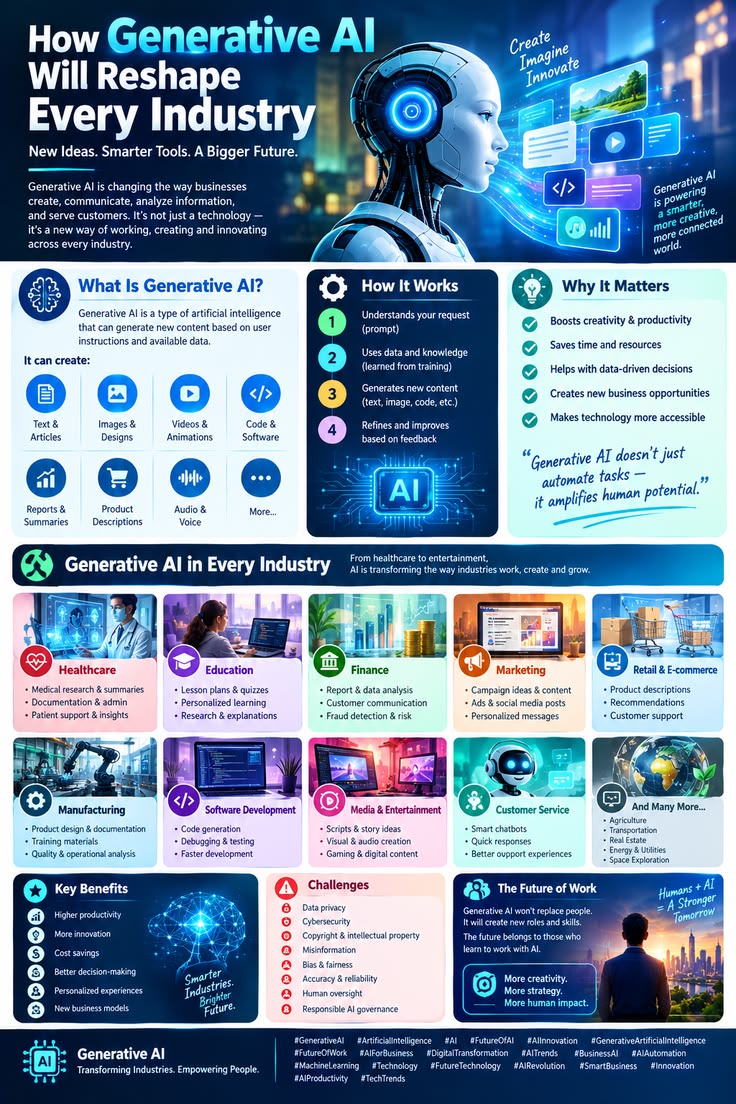
- Humanoid white robot/android close-ups with glowing blue eyes, used as generic stand-ins for “AI” across unrelated stories: fake-news detection, ethics explainers, generative-AI-for-industry infographics, and even an illustration of a “top AI news anchor” [3, 22, 41, 43, 48, 49].
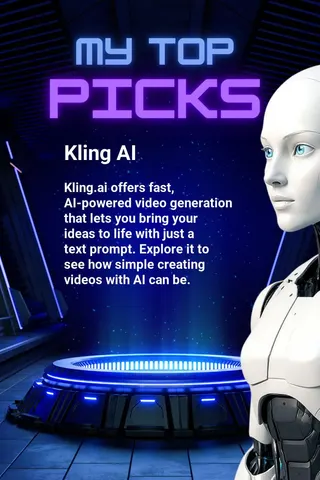
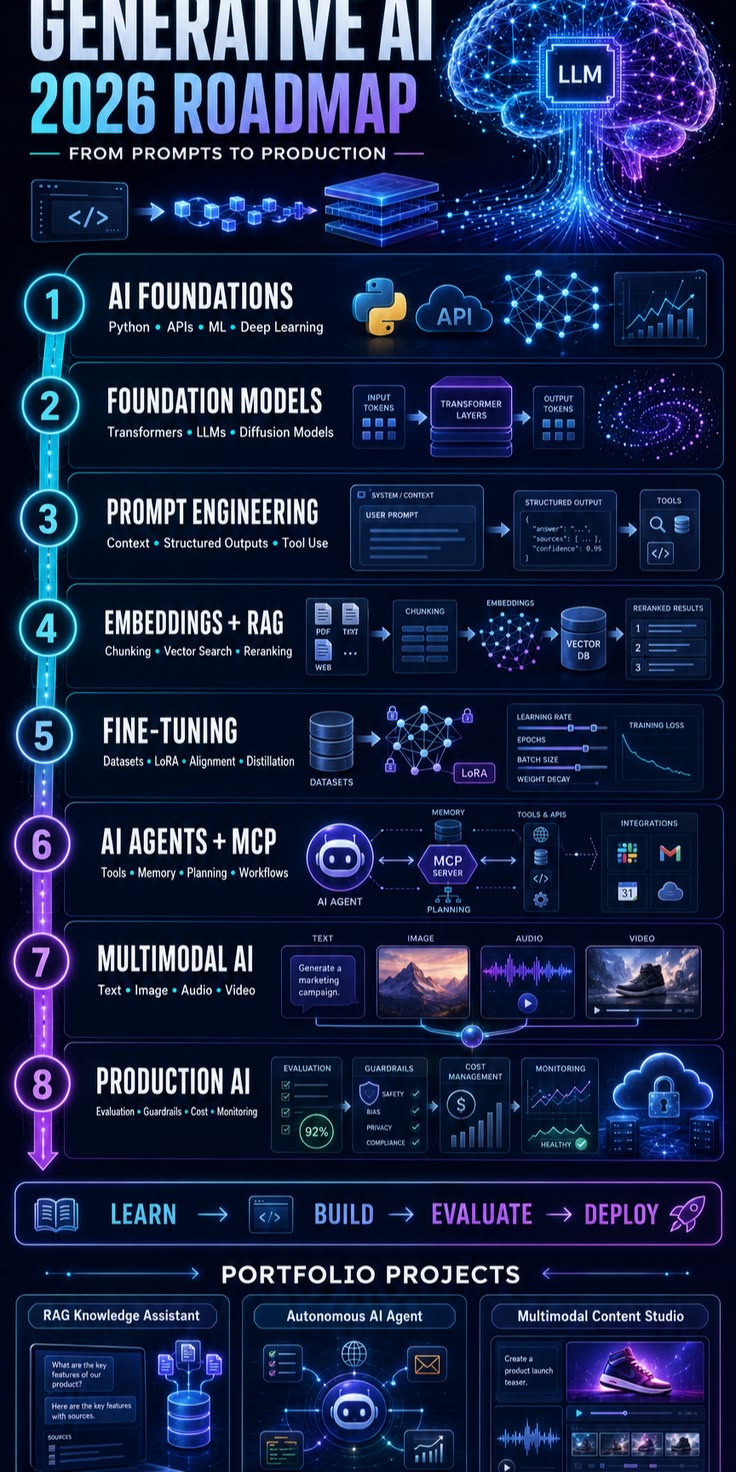
- Neon-on-navy SaaS-ad infographics: Dark blue/black backgrounds with glowing purple, pink, and cyan outlined icon boxes and bold condensed headlines such as “6+ BEST AI VIDEO GENERATION WEBSITES” and “AI IMAGE VIDEO — BEST QUALITY VS BEST FREE.” This is the dominant pin format for “which tool should I use?” content [4, 9, 39].
- Tool-logo grids / comparison listicles: The same products recur—Runway, Pika, Kling AI, Luma (Dream Machine), Canva AI, and Hailuo AI for video; ChatGPT/DALL·E, Midjourney, Gemini, Adobe Firefly, Recraft, Ideogram, and Krea for images [4, 9, 39].
- “AI-generated news” anxiety imagery: Real broadcast-style chyrons, including “AI GENERATED” and NBC News-style lower-thirds, stamped over obviously synthetic anchors/reporters, as well as a “FAKE” rubber stamp over a robot holding a phone. Trust and misinformation are recurring visual genres, not merely textual topics [3, 32, 45, 48].
- Circuit-board/chip macro imagery with a glowing “AI” wordmark embedded in silicon, used as generic hardware/compute imagery for “AI is everywhere” pins [5].
- Style-transfer/identity-preservation demo grids: A single source video or photo re-rendered side by side in “wooden blocks,” “origami,” “lego,” and “flowers” styles. This is a specific product-demo format, in this case a Luma-style capability showcase [2].
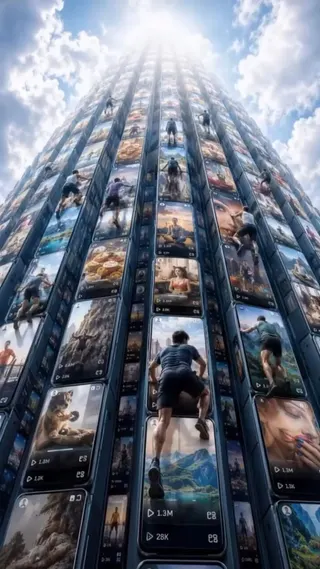
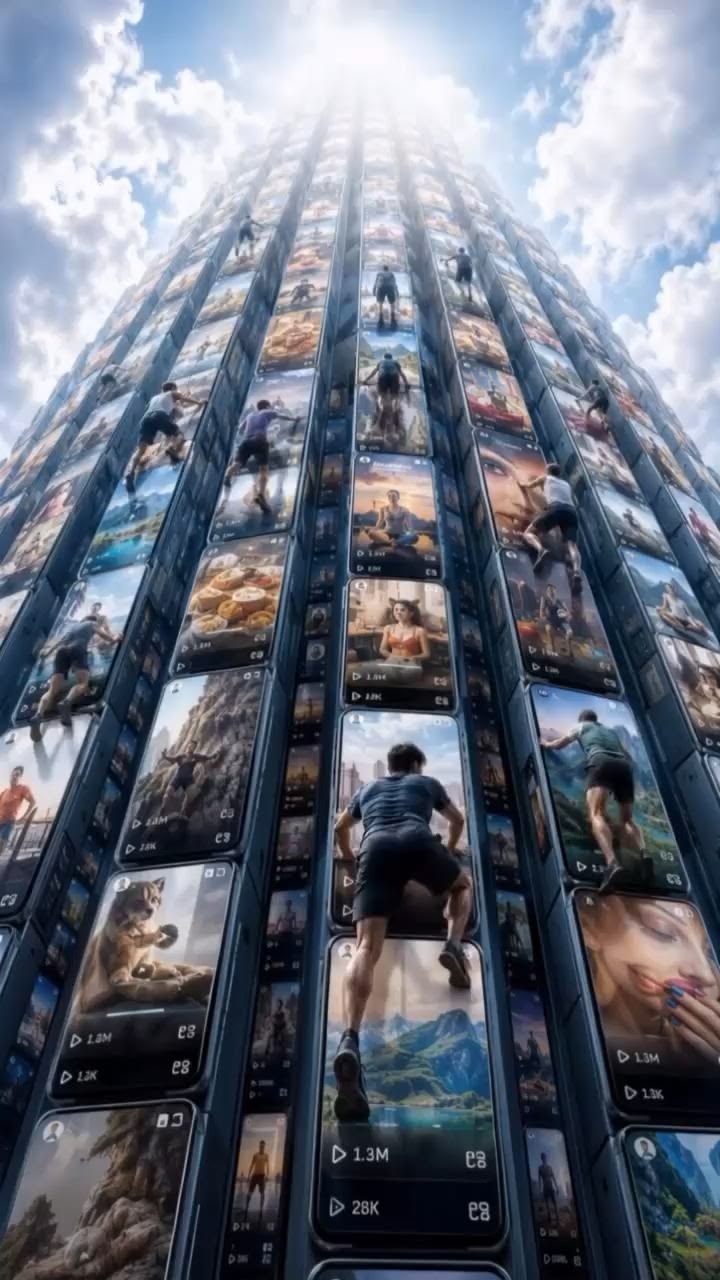
- Collage / wall-of-thumbnails motifs: Dozens of small AI-generated video frames or vertical short-video cards tiled into one tall image, representing the volume and scale of AI content flooding feeds [31, 49].
Notable pins
- #1 — “AI News: Anthropic Leak Shows Us The Future of AI...”: A reaction-thumbnail format naming Anthropic next to OpenAI, Google, and Microsoft logos. It shows closed-source lab news being packaged as drama and leaks to attract clicks.
- #2 — “Google announces ultra-high quality video...”: A 3×5 grid that re-renders a source video into wooden-block, origami, lego, and flower styles. It is a concrete Nano Banana/Gemini-style identity-preserving video-restyle demo, not simply a logo slide.
- #4 — “6+ Best AI Video Generation Websites”: An infographic naming Runway, Pika, Kling AI, Luma, Canva, and Hailuo as the default video-generation toolkit, with a callout claiming that by 2026, 80% of online content will include video.
- #9 — “AI Image Video: Best Quality vs Best Free”: A decision-tree infographic dividing paid tools—ChatGPT Plus, Gemini Advanced, Midjourney, Adobe Firefly, Recraft, Runway Gen-3, Luma, Pika Pro, Kaiber, Synthesia—from free tools—Ideogram, Gemini Free, SeaArt, Playground, Krea, Canva, Inkscape, CapCut, Pika Free, Runway Free. It is useful as a snapshot of which tools Pinterest currently treats as top-tier.
- #11 — “Veo 3 Image-to-Video: Fast Generation & Native Audio via Gemini API”: A funnel graphic showing image and text inputs converging into one output stream, branded “Gemini API.” Closed-source video generation with audio is being marketed as a developer API product, not merely a consumer app.
- #26 — “Google's Gemini Omni Turns Anything Into Video”: A pin from third-party marketing agency Osiz Technologies repackaging a Gemini Omni capability announcement. It shows closed-model news being immediately repurposed as SEO and lead-generation content by unrelated development shops.
- #28 — “AI News: OpenAI Finally Released What We Asked For”: The same reaction-thumbnail creator and format as #1, now focused on OpenAI. It confirms a recurring channel or series rather than a one-off.
- #38 — “Amuse 3.0”: A photorealistic old-fisherman portrait credited as an “AI generated image created on AMD.” It is notable as one of the few pins tying image generation to a specific hardware vendor’s on-device/NPU angle rather than a cloud API.
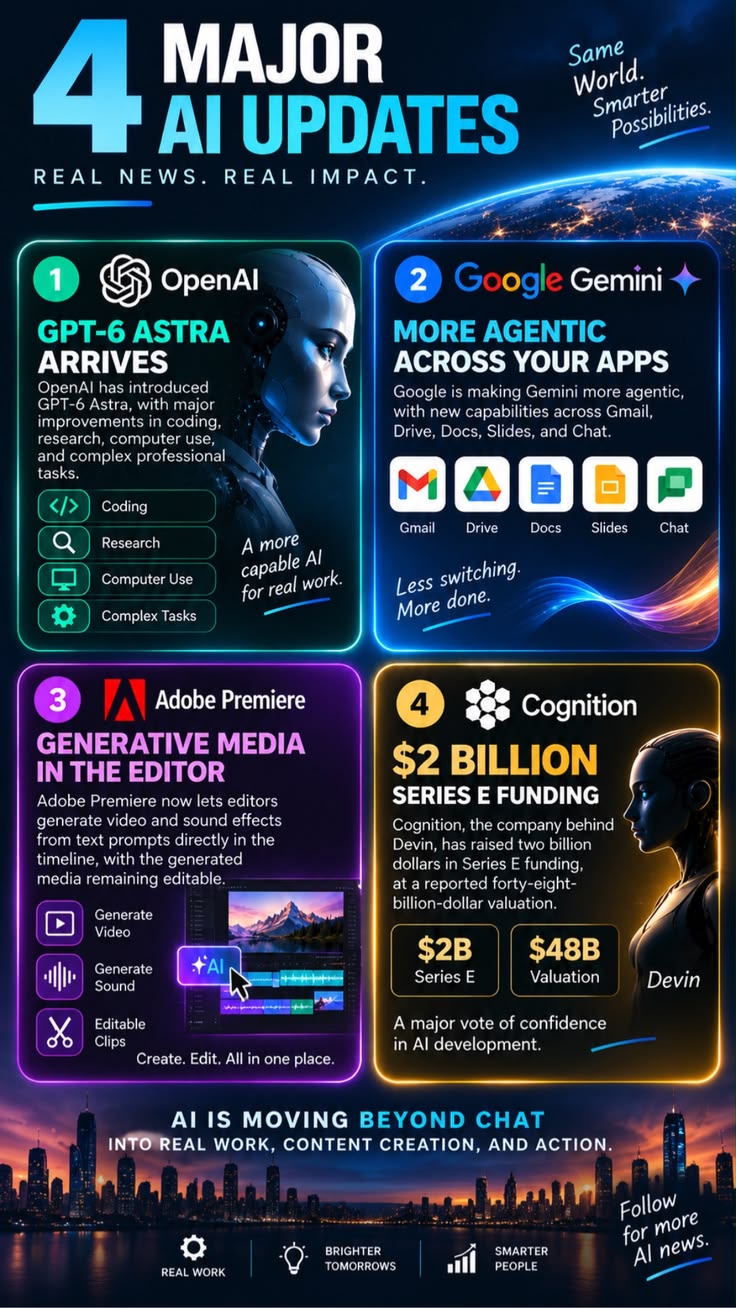
- #39 — “4 Major AI Updates”: Names GPT-6 Astra, Gemini’s agentic operation across apps, Adobe Premiere’s in-timeline generative video/sound, and Cognition’s $2B Series E at a $48B valuation. It is the most concrete, date-sensitive closed-source news digest in the set.
- #45 — “AI Generated News Clip”: A synthetic anchor-style talking head labeled directly on the image. It is the clearest single-frame illustration of AI video entering news/media production, echoing the NBC-News-chyron pins #32 and #48.
Signals
- What is current: Pinterest’s tool landscape is dominated by a small set of closed-source names—Runway, Pika, Kling, Luma/Dream Machine, Google Gemini/Veo, OpenAI, and Adobe Firefly/Premiere. Open-source names such as Stable Diffusion, Flux, HunyuanVideo, Wan, LTX, and ComfyUI are essentially absent. Pinterest’s image-generation audience is oriented toward “which paid/free app should I use?” content and reaction-style news roundups rather than technical, model-level discussion.
- A strong secondary trend: anxiety and trust imagery—“FAKE” stamps, AI news anchors, AI-generated NBC-style clips, and “can you trust that voice?” detector graphics—is about as common as tool-comparison content. Misinformation and media trust are first-class visual genres on the platform.
- Absent: No open-source model or repository names, no Hugging Face branding, no LoRA/fine-tuning/ComfyUI workflow screenshots, no benchmark charts, and little about video-generation research papers or technical breakthroughs. Pinterest’s form of this topic is almost entirely consumer- and marketing-facing: tool ads, “best of” listicles, and AI-anxiety illustrations rather than the developer/enthusiast perspective found on Reddit or X.
- Several pins are old or evergreen SEO content circulating again—such as generic “AI Image Generation” stock-photo pins and a 2025 “Top AI Video Generators” listicle—rather than breaking news from this week. Pinterest mixes timeless marketing content with freshly dated material, so recency must be judged pin by pin using visible dates and version numbers, such as “GPT-6 Astra” and “Amuse 3.0,” rather than assumed.
Limits
- The stage playbook states that images were already collected by a headless-browser worker. Pinterest was not browsed directly, and nothing beyond
pinterest.pins.md/images/pinterest/could be searched. - All 50 pins came from one flat query, “Image and Video Generation AI News,” without genre separation. It was therefore impossible to divide them into closed- and open-source reports as the brief’s two-part structure asks; the image set simply does not surface open-source tools or projects for that half of the report.
- Twenty of the 50 images were individually inspected. The remaining thirty—mostly generic “(untitled)” stock-graphic entries—were not opened one by one, although their titles suggest repeated versions of the same patterns already covered.
- Pin engagement metrics such as saves and comments were unavailable in the collected data, so inferences about what is trending are based only on visual and thematic repetition, not popularity metrics.
Recommended actions
- Continue tracking benchmark updates for small open models such as Qwen-Image-2.1.
- Verify license terms before classifying models that claim to be “open source.”
- Include migration trends toward replacement services after the Sora API shutdown in the next research cycle.
- Add proper-noun searches such as ComfyUI and Hugging Face for Bluesky and Pinterest to address weak visibility of open-model content.
- Recollect X using theme-specific keywords instead of relying on the trend panel.
Collected images






































Data quality notes
Across all six platforms, the brief’s target of roughly 20 items per social network was not reached. Only 8 of 40 X posts were on theme because the search seed was a Croatia-local trend panel; Bluesky’s keyword API was unavailable due to 403 errors, forcing reliance on discovered accounts; and Pinterest’s single query did not collect any open-source material in the first place.